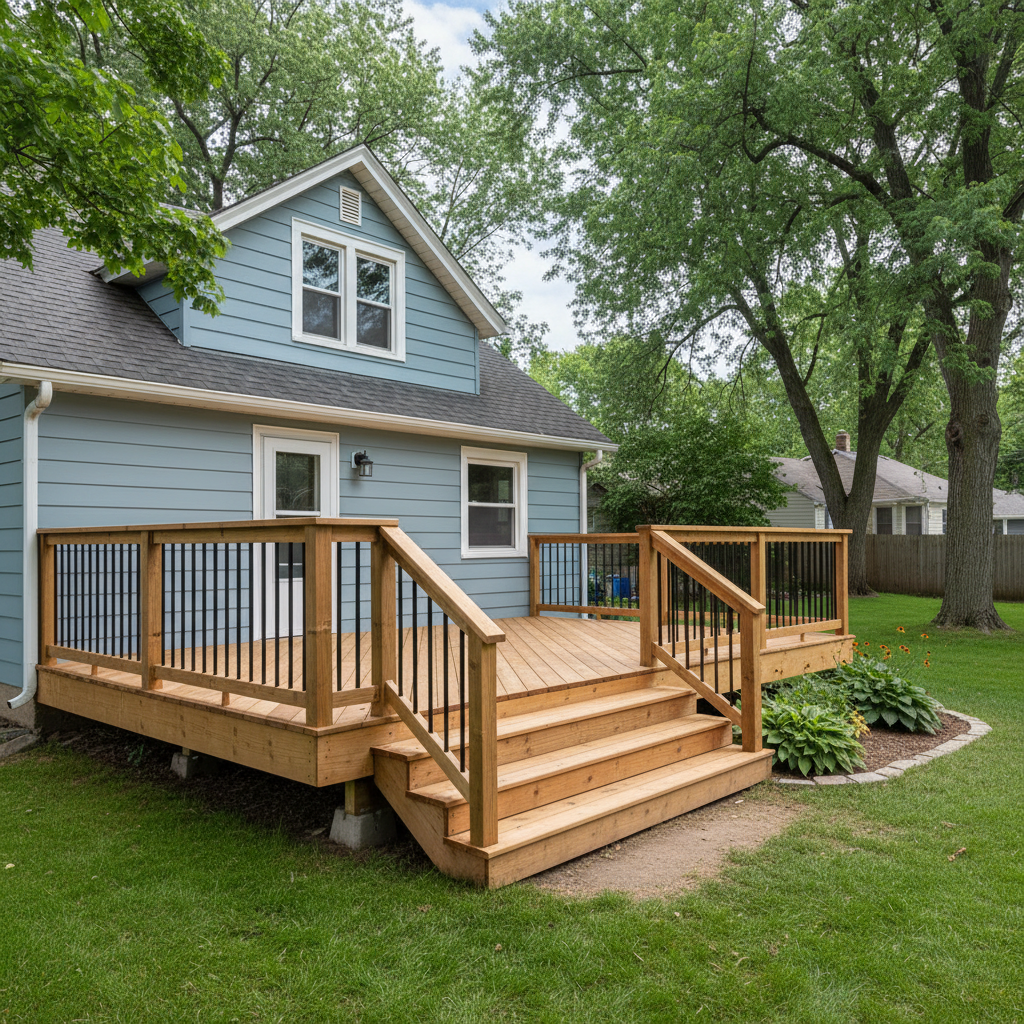
So, what's the real cost of a new wooden deck here in St. Paul? That's the million-dollar question, isn't it? And if you've been poking around online, you've probably run into a lot of vague answers. I totally get it. Nobody wants to just say, 'it depends.' But honestly, there's a lot that goes into it. As someone who builds these things every day, I can tell you there are some actual numbers and factors you really need to understand before you commit.
What Makes Your Wooden Deck's Price Tag Go Up (or Down)?
You might think it's just how big the deck is, but that's only part of the story. Here's what we, as builders, actually look at when we're putting together a quote for you:
- Size and Shape: This one's pretty obvious. A bigger deck means more materials, and yep, more labor. A simple rectangle will always be cheaper than some multi-level, curvy design with a bunch of angles. Every single corner, every bump-out adds complexity, and that means more cost.
- Material Choice: This is a huge factor for wooden decks. Pressure-treated pine? That's your most budget-friendly option, but you'll need to do more maintenance. Cedar looks amazing and naturally resists rot, though it costs more upfront. Then you've got exotic hardwoods like Ipe – beautiful, incredibly durable, but they'll really bump up your material budget.
- Deck Height and Foundation: A ground-level deck is simpler and cheaper to build than one that's, say, 10 feet off the ground. Taller decks need much stronger footings, longer posts, and often more complicated framing and railing systems just to meet code. Oh, and speaking of code, our frost line here in Minnesota means footings have to go down at least 42 inches. That adds to the digging and concrete work compared to places with warmer weather.
- Railing Style: Basic pressure-treated wood pickets are the cheapest way to go. But if you upgrade to cedar, aluminum balusters, glass panels, or even custom metalwork, you'll definitely see the price climb.
- Stairs and Landings: Every step and every landing means more material and more labor. A simple set of three steps is one thing; a grand staircase with multiple turns is a whole different ballgame.
- Permits and Inspections: You just can't skip these. In St. Paul, you'll need a permit for most new decks or any big renovations. This makes sure your deck is safe and meets all the local rules. The permit fees themselves aren't huge, but the time we spend on planning, submitting paperwork, and getting inspections is definitely built into our overall costs.
- Site Accessibility: Can we easily get a mini-excavator into your backyard, or are we going to have to dig everything by hand? Is your lot flat, or are we working on a slope up in Highland Park? Tricky access means more manual labor, which translates to more time and higher costs.
So, What's the Typical Price Range for a Wooden Deck in St. Paul?
Alright, let's talk actual numbers. These are general ranges for a professionally built, code-compliant wooden deck. They don't include extras like built-in benches, pergolas, or fancy lighting. These prices are just for the deck structure itself, installed.
- Basic Pressure-Treated Pine Deck (150-250 sq ft): You're usually looking at $35-$50 per square foot. So, a 200 sq ft deck might cost you anywhere from $7,000 to $10,000. This would be a simple, rectangular design, standard railings, and a basic set of stairs.
- Mid-Range Cedar Deck (200-350 sq ft): For cedar, you're typically in the $50-$75 per square foot range. A 250 sq ft cedar deck could easily be $12,500 to $18,750. This often includes a bit more design complexity or some nicer railing components.
- Larger or More Complex Designs (300+ sq ft, multi-level, exotic wood): For these kinds of projects, especially if you're using hardwoods or have intricate designs, the price can easily jump from $75 to $100+ per square foot. A 300 sq ft Ipe deck, for example, could start at $22,500 and just keep climbing depending on what features you add.
Remember, these are just starting points. Every project is unique, right? These numbers cover materials, labor, and those basic permitting fees.
What Should a Good Quote Actually Show You?
When you get a quote from St Paul Deck Solutions — or any reputable builder, for that matter — it shouldn't just be one big number. You really want to see a clear breakdown. Here's what to look for:
- Detailed Scope of Work: What exactly are they going to build? Size, shape, height, how many stairs, what kind of railing?
- Material Specifications: What type of wood for the decking, the framing, the railings? What kind of fasteners will they use?
- Permit Costs: Who's responsible for getting the permit, and is that cost already included?
- Labor Costs: Often combined with materials, but it's good to know it's all accounted for.
- Demolition and Haul-Away: If you've got an old deck, is removing it part of the price?
- Site Preparation: Any grading or special considerations they need to make?
- Warranty Information: What kind of warranty do they offer on their work?
- Payment Schedule: How will payments be set up? (Like, a deposit, progress payments, then a final payment.)
If a quote is just a single line item, that's a pretty big red flag. You need transparency to make a smart decision.
How to Avoid Paying Too Much for Your St. Paul Deck
Nobody wants to feel like they got ripped off. Here's how you can make sure you're getting a fair price:
- Get Multiple Quotes: This is absolutely crucial. Talk to at least three different reputable contractors. Don't just pick the cheapest one; really compare what each quote includes.
- Be Specific About Your Vision: The more details you can give upfront, the more accurate your quotes will be. Have a clear idea of the size, materials, and features you want. Pictures help a ton!
- Understand the Value: A super cheap deck might save you money now, but if it's built poorly or with low-quality materials, you'll end up paying for it later in repairs and needing to replace it sooner. A well-built deck adds real value and enjoyment to your home for years.
- Ask About Experience and References: Check out their past work. Talk to people they've built decks for. A good contractor will have plenty of happy customers, no doubt about it.
- Don't Be Afraid to Ask Questions: If something in the quote doesn't make sense, just ask for clarification. A good contractor will take the time to explain things to you patiently.
- Consider the Off-Season: Sometimes, if you book your project for late fall or early spring, you might get a slightly better rate. Contractors are often trying to fill their schedules outside the busy summer rush, you know?
Building a new deck is a big investment, sure, but it's one that can truly change your outdoor living space. Do your homework, get detailed quotes, and pick a contractor you really trust. You'll be enjoying your new deck for years to come.