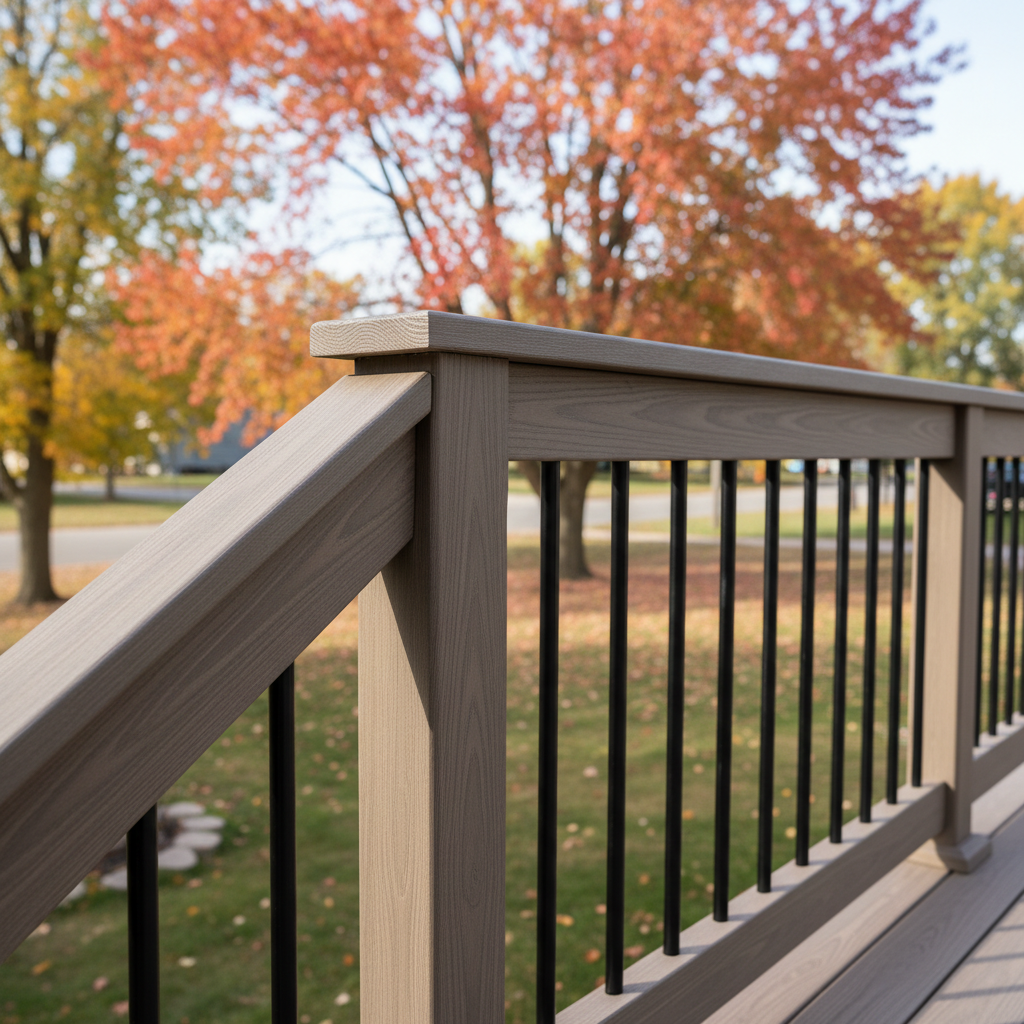
Planning a new deck or upgrading an old one means thinking about railings. And let's be honest, it's not always the most exciting part of the project, but it's absolutely critical for safety and aesthetics. Here in St. Paul, I get a lot of the same questions from homeowners about railings, so I figured I'd put together some straight answers. No fluff, just what you need to know.
Do I even need a railing on my deck?
This is probably the most common question I hear, and the answer is almost always yes. The International Residential Code (IRC), which St. Paul generally follows, requires a guardrail (that's the technical term for a railing) on any deck surface that's 30 inches or more above the ground. That 30 inches is measured from the walking surface of the deck down to the grade directly below it. So if you've got a deck that's even just a few steps up, chances are you'll need a railing. It's not just about code, though; it's about keeping your family and guests safe. Nobody wants an accidental tumble.
What are the St. Paul railing height requirements?
Once you know you need a railing, the next thing is how tall it needs to be. For residential decks, the top of the guardrail has to be at least 36 inches high, measured from the deck surface. That's a pretty standard height across the country. Now, if you've got a set of stairs leading up to your deck, those handrails have different requirements. Stair handrails need to be between 34 and 38 inches high, measured vertically from the nosing of the treads. It's important to get these measurements right, not just for passing inspection, but for proper safety and comfort when using your deck.
What about the spacing between railing pickets or balusters?
This is another big one for safety, especially if you have kids or pets. The code states that you can't have any opening in your guardrail that a 4-inch sphere can pass through. This applies to the space between balusters (those vertical posts), but also any decorative cutouts or gaps in your railing design. The idea is to prevent small children from squeezing through and falling, or getting their heads stuck. So, when we're installing, we're always careful to make sure those gaps are tight enough. You'll often see balusters spaced about 3.5 inches apart center-to-center to meet this rule, but it depends on the baluster width itself.
What materials are best for deck railings in Minnesota?
We've got some tough weather here in St. Paul, from humid summers to brutal winters with heavy snow and ice. So, your railing material needs to stand up to it. Here are the main options I work with:
- Treated Lumber: It's the classic choice, affordable, and easy to work with. But it needs regular maintenance – staining or painting – to look good and last. If you skip that, it'll warp, crack, and rot pretty quickly with our freeze-thaw cycles.
- Composite: This is a popular choice for low maintenance. It's made from wood fibers and plastic, so it resists rot, splinters, and insects. You won't need to paint or stain it, just clean it periodically. It costs more upfront than wood, but saves you time and money on maintenance down the road.
- Aluminum: Super durable, lightweight, and virtually maintenance-free. Aluminum railings come in various colors and styles, offering a sleek, modern look. They're great for visibility too, especially if you go with thin pickets. It's a higher initial investment but lasts forever.
- Cable Railing: This is a modern, minimalist look that uses horizontal stainless steel cables. It offers fantastic views and is very durable. Installation can be a bit more specialized, and it's definitely on the higher end of the price spectrum.
- Glass Panel Railing: For an unobstructed view, glass panels are hard to beat. They look fantastic, especially overlooking something like the Mississippi River bluffs. They're durable but require more cleaning to keep them sparkling. They're also the most expensive option and need careful installation.
Each material has its pros and cons, and what's