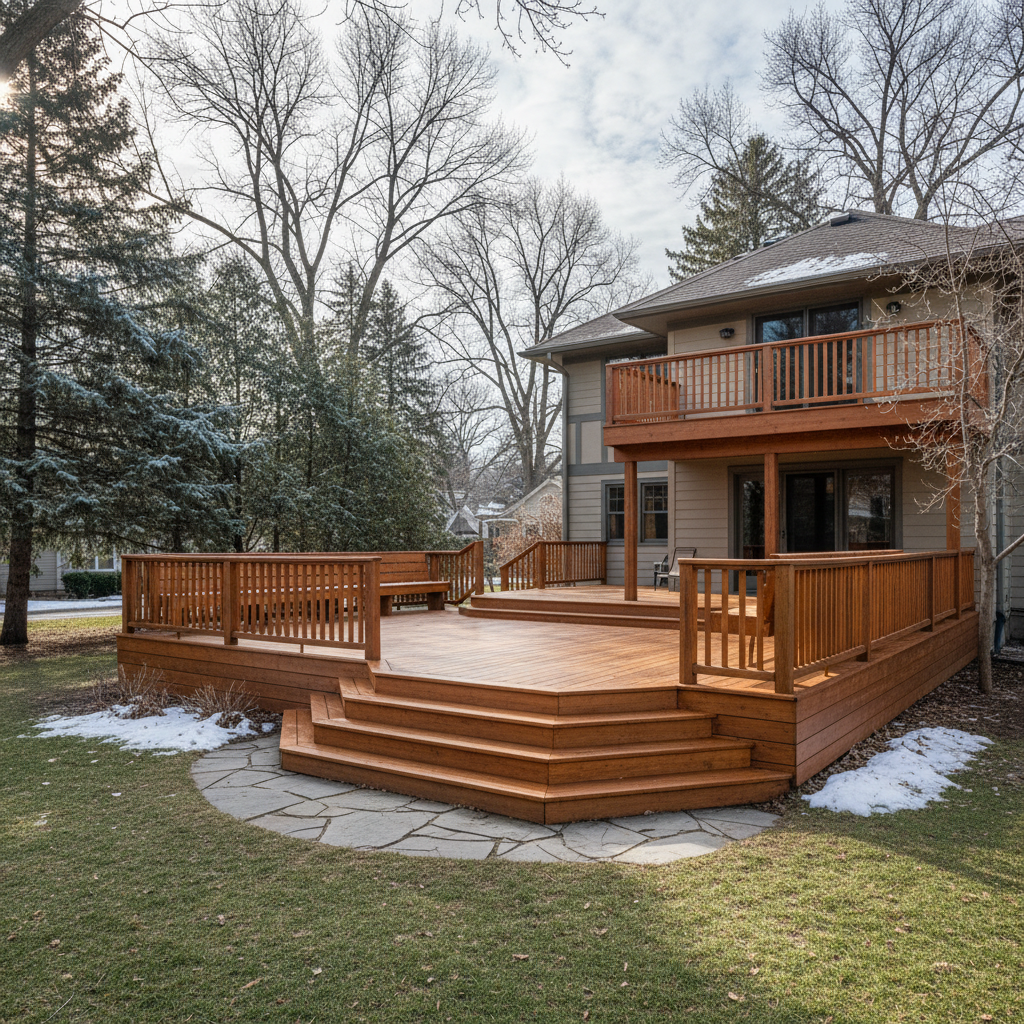
You've got a deck, right? Here in St. Paul, our weather isn't exactly gentle. From brutal winters to humid summers, your deck really takes a beating. Protecting that investment means you need to understand how our local climate impacts wood and, just as important, know when to act. I've seen countless decks across neighborhoods like Highland Park and Como Park, and the ones that last? They're the ones that get smart, seasonal attention.
Minnesota's Climate vs. Your Wooden Deck
Let's be real: our climate is a deck's worst enemy. It's not just the snow, you know. It's those constant freeze-thaw cycles that truly do a number on wood. Water sneaks into tiny cracks, freezes, expands, and then thaws, slowly but surely breaking down the wood fibers. Then summer hits, baking the wood, drying it out, and causing it to crack and splinter. Humidity can bring on mold and mildew, especially in shaded areas or if your deck doesn't get good airflow underneath.
This isn't just about how things look; it's about structural integrity. Rot, warping, and loose fasteners are all consequences of neglecting your deck in our climate. That's why year-round care isn't a suggestion; it's a necessity, plain and simple.
When to Schedule Deck Work: Timing is Everything
So, when's the best time to tackle deck maintenance or even a full rebuild? It really depends on the job, but generally, you're looking at spring and fall. Here's my take:
- Spring (April-May): This is prime time for cleaning and inspections. Once the snow's gone and things dry out a bit, you can finally see what winter left behind. It's also a good window for minor repairs before the summer rush. If you're thinking about a new deck or a major renovation, getting on a builder's schedule in early spring is smart. You'll beat the summer backlog, trust me.
- Summer (June-August): Not ideal for staining or sealing. It's often too hot and humid, which can mess with drying times and product adhesion. Plus, who wants to be working on their deck when they could be enjoying it? We'll do repairs and builds if the schedule allows, but we're often booked solid by then.
- Fall (September-October): This is your last chance for major staining or sealing before winter. The cooler, drier air is perfect for finishes to cure properly. It's also a great time for a thorough cleaning to remove leaves and debris that could trap moisture over winter.
- Winter (November-March): Forget about it for most exterior work. The cold, snow, and ice make it impossible to properly prepare surfaces or apply finishes. New builds can sometimes happen in milder winter stretches, but it's definitely not our first choice.
For St Paul Deck Solutions, we're usually booking spring and summer projects in late winter or early spring. Don't wait until June to call us if you want a new deck by August!
Weather Conditions That Affect the Job
You might think a sunny day is always a good day for deck work, but it's just not that simple. Here's what we're always watching:
- Temperature: Most stains and sealants have specific temperature ranges for application, usually between 50-90°F. Too cold, and they won't cure. Too hot, and they'll flash dry, leading to uneven results.
- Humidity: High humidity can extend drying times significantly. It can also trap moisture, which is bad news for wood.
- Rain: Obvious, right? You can't stain or seal a wet deck, and you need a good 24-48 hours of dry weather after application for it to cure. Rain during construction can also delay things, especially for concrete footings or if we're dealing with sensitive materials.
- Wind: Strong winds can blow dust and debris onto wet finishes, ruining the look. They can also make it tough to work safely, especially when cutting or lifting materials.
- Sunlight: Direct, intense sun can cause finishes to dry too quickly, leading to lap marks or poor penetration. Overcast days are often better for applying finishes.
We're always checking the forecast and adjusting our schedule. Sometimes, that means pushing things back a day or two, but it's always to make sure your deck gets the best possible outcome.
Year-Round Protection for Your Deck Investment
So, how do you keep your deck looking good and lasting long through all four of our distinct seasons?
- Regular Cleaning: Don't just wait for spring. Sweep off leaves and debris regularly, especially in fall. Use a deck cleaner and a stiff brush (or a pressure washer on a low setting, carefully) at least once a year to remove dirt, mildew, and algae.
- Inspect Annually: Take a good look at your deck every spring. Check for loose boards, protruding nails or screws, splinters, and signs of rot. Pay attention to railings and stairs – these are safety critical. Look for areas where the finish might be wearing thin.
- Stain or Seal as Needed: This is your deck's sunscreen and raincoat. Depending on the product and how much sun exposure your deck gets, you'll need to reapply every 1-3 years. A good quality penetrating oil stain is usually best for our climate, as it soaks into the wood and provides better protection against moisture.
- Clear Snow Carefully: If you shovel your deck, use a plastic shovel and be gentle. Don't use ice melt products on wood, as they can damage the finish and even the wood itself. Let the sun and air do their work if possible.
- Trim Vegetation: Keep bushes and trees trimmed back from your deck. This improves airflow, reduces shade (which helps prevent mold), and keeps moisture from accumulating.
Your deck is an extension of your home, and it deserves care. By understanding our unique St. Paul climate and taking these seasonal steps, you'll keep it safe, beautiful, and functional for years to come. If you've got questions or need a hand with a repair or a full deck replacement, you know who to call.