What's the best material for a pool deck in Minnesota?
Look, there's no single 'best' material for everyone, but for St. Paul, you've got to consider our crazy weather. We go from scorching hot and humid summers to deep-freeze winters, often with a lot of snow and ice. That expansion and contraction cycles are brutal on materials.
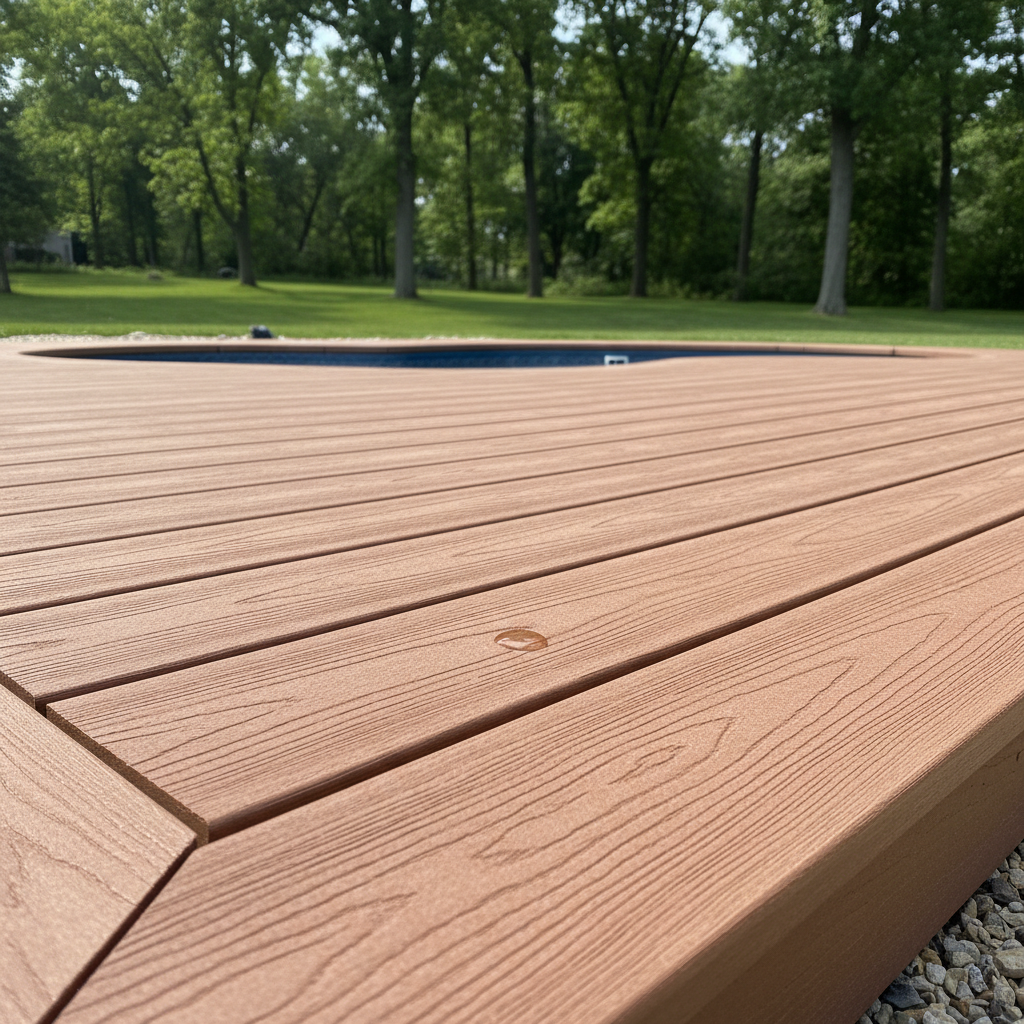
Composite decking is a really popular choice, and for good reason. It's low maintenance – no staining or sealing, ever. It resists rot, insects, and splintering, which is a big plus around a pool where people are barefoot. The downside? It can get hot under direct sun, and it's generally more expensive upfront than treated wood. Some folks don't like the 'plastic' feel, but modern composites have come a long way in mimicking wood grain and texture.
Pressure-treated wood is still a solid, budget-friendly option. It's real wood, so it feels natural underfoot, and it's more affordable to install. But you're signing up for maintenance: regular cleaning, staining, or sealing every couple of years. If you skip that, it'll warp, crack, and splinter, especially with all the water exposure from a pool. And even treated wood can eventually succumb to our freeze-thaw cycles if not properly cared for.
Pavers or concrete are also options, especially for ground-level patios around a pool. They're durable and can look great, but they're a different aesthetic than a raised deck. Concrete can crack over time, and pavers can shift if the base isn't perfect. For a raised deck, though, it's usually wood or composite.
How long does a pool deck typically last here?
That really depends on the material and how well it's maintained. A well-built pressure-treated wood deck, if you're diligent with the cleaning and sealing every 2-3 years, might get you 15-20 years. But that's with *good* maintenance. If you neglect it, you'll be lucky to get 10-12 before boards start rotting or becoming unsafe.
Composite decks, on the other hand, usually come with warranties of 25 years or even longer. Since they don't require staining or sealing, their lifespan is less dependent on homeowner upkeep beyond basic cleaning. They're designed to withstand the elements much better without degrading. I've seen some older composites in Highland Park that are still looking pretty good after 20 years with minimal fuss.
Ultimately, a quality build is key no matter the material. Proper framing, good drainage, and using the right fasteners make a huge difference in how long your deck will hold up against St. Paul's weather.
What about permits? Do I need one for a pool deck?
Absolutely, yes. For almost any deck construction in St. Paul, especially around a pool, you'll need a permit from the city's Department of Safety and Inspections (DSI). This isn't just red tape; it's about safety. Pool decks have specific requirements because of the water exposure and the potential for people to be running around wet. There are rules about railings, stairs, and even the type of fasteners you can use.
Any reputable contractor, like us at St Paul Deck Solutions, will handle the permit process for you. We'll draw up the plans, submit them, and make sure everything is up to code. Trying to build without a permit can lead to fines, having to tear down your work, or difficulties when you try to sell your house later. It's just not worth the headache.
How important is drainage around a pool deck?
It's critical. Seriously, it's one of the most overlooked things that can cause major problems down the line. Water pooling on or under your deck is a recipe for disaster. It leads to wood rot, mold and mildew growth, insect infestations, and can even compromise the structural integrity of your deck over time. Plus, standing water near your house can cause foundation issues.
When we design and build a pool deck, we're always thinking about how water will behave. This means ensuring the deck has a slight slope away from your house, using proper spacing between deck boards for drainage, and sometimes installing specific grading or French drains around the perimeter. You don't want water sitting on your deck or, worse, running back towards your home's foundation. Good drainage protects your investment and keeps your deck safe and sound.
Can I build a pool deck myself to save money?
You can, but I'd strongly advise against it unless you have significant construction experience, especially with decks. Building a pool deck isn't like putting together IKEA furniture. There are complex structural considerations, specific building codes for decks (even more so for pool decks), and the need for precision.
Here's what I've seen happen when homeowners try to DIY a deck without the right skills:
- Safety hazards: Improperly secured railings, weak joists, or unstable footings are dangerous, especially around a pool where people are wet and less stable.
- Code violations: You might not know all the local St. Paul codes, leading to failed inspections, fines, and having to redo work.
- Material waste: Mistakes cost money in wasted materials and time.
- Shorter lifespan: A poorly built deck won't last as long, meaning you'll pay more in repairs or replacement sooner than if you'd hired a pro.
While you might save a few bucks upfront, the potential for costly mistakes, safety risks, and a shorter-lived deck usually outweighs the initial savings. A professional builder knows the codes, has the right tools, and understands how to construct a durable, safe deck that will stand up to our Minnesota seasons.
What's the best time of year to build a pool deck in St. Paul?
Honestly, you can build a deck almost any time of year, but some seasons are definitely better than others for pool decks. Spring and fall are generally ideal. The weather is milder, which is more comfortable for the crew, and the ground isn't frozen solid (like in winter) or super saturated (like during a heavy spring thaw).
Building in the summer is fine too, but it can get pretty hot for the crew, and summer is usually our busiest season, so lead times might be longer. Winter construction is possible, but it adds challenges. Digging footings in frozen ground is tough and more expensive, and working with materials in extreme cold can be difficult. Plus, you won't be able to enjoy your new pool deck right away.
My advice? Start planning in the late fall or early winter for a spring build. That way, you get on our schedule before the spring rush, and your deck will be ready to go when the warm weather hits.
How do I choose the right contractor for my pool deck?
This is a big one. You're making a significant investment, so you want someone reliable. Here's what I recommend:
- Check for licensing and insurance: Make sure they're licensed by the state and the City of St. Paul, and that they carry proper liability and worker's compensation insurance. Ask for proof.
- Look at their portfolio: Do they have experience building pool decks specifically? Can they show you examples of their work?
- Get multiple quotes: Don't just go with the first guy. Get 2-3 detailed quotes. Be wary of quotes that are significantly lower than the others – it often means they're cutting corners.
- Ask for references: Talk to past clients. Ask about communication, timeliness, and if they were happy with the final product.
- Understand the contract: Make sure everything is in writing: materials, timeline, payment schedule, and what's included (and not included).
- Local knowledge: Do they know St. Paul's specific codes and common issues like our clay soil or how our winters affect construction? A local company like St Paul Deck Solutions will have that expertise.
Don't rush this decision. A good contractor will be transparent, communicate well, and build you a safe, durable deck that you'll enjoy for years.
Are there any specific safety considerations for pool decks?
You bet there are. Safety is paramount around a pool. Here are the big ones:
- Railings: If your deck is elevated, railings are a must. They need to be a certain height (usually 36 or 42 inches, depending on deck height) and the baluster spacing can't allow a 4-inch sphere to pass through. This is to prevent small children from squeezing through.
- Gate latches: If your pool is fenced, any gate from the deck to the pool area needs self-closing hinges and a self-latching mechanism that's out of a child's reach.
- Non-slip surfaces: While no surface is perfectly non-slip when wet, some materials are better than others. Textured composites or certain types of wood can offer more grip than smooth, sealed surfaces.
- Lighting: Good lighting around your deck and pool area is crucial for evening use, preventing trips and falls.
- Clearances: Make sure there's enough clear space around the pool for safe movement, and that the deck isn't encroaching on required setbacks from property lines or other structures.
These aren't just suggestions; they're often code requirements designed to prevent accidents. A professional builder will make sure your deck meets all these safety standards.